
I’m writing this from Chiang Mai, one of my favorite places in the world. My Destination Thailand Visa (DTV Visa Thailand) came through in January 2026 at the Royal Thai Embassy in Buenos Aires. I submitted my application online, no agent, no fabricated documents, and had my visa approved over the weekend.
A few details made my application unusual. I hold a Russian passport but I do not live there since February 2020. I run an LLC. I was applying from Argentina on a digital nomad visa and applying for workation DTV. None of the popular fancy YouTube videos or guides I’d watched covered my situation.
So this is the article I wish someone had written for me: the requirements as they actually work in 2026, full application breakdown, and the things some people had to learn the hard way after arriving.
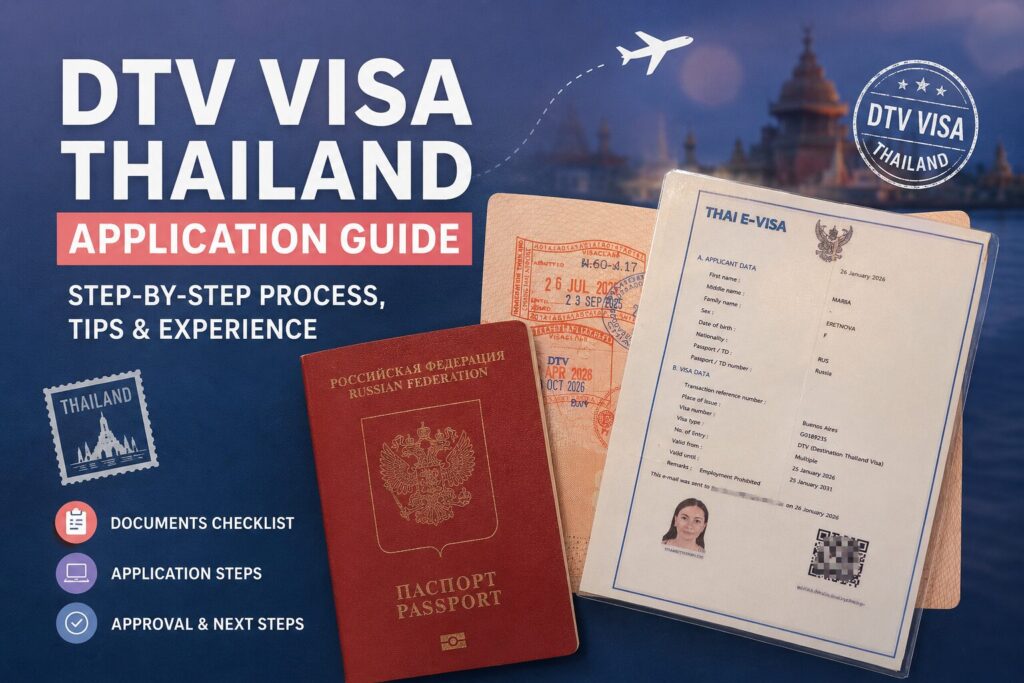
Current way of saying is just DTV as it has both visa and Thailand in the name already. But I know that people are searhing for it typing DTV + visa and Thailand, so I kept it closer to how readers understand it.
If you would like to contribute to research and make sure information online stays factual and doesn’t feed into fear mongering, fill up this anonymous Google form: DTV RESEARCH. If you were rejected, I have a form, too. here
Table of Contents
What is the DTV?
The Destination Thailand Visa, or how we all call it DTV, is Thailand’s long-stay visa for remote workers, freelancers, soft-power participants (Muay Thai, Thai cooking, medical treatment), and their immediate families.
The Cabinet approved it in May 2024, and the Royal Gazette announcement followed on 15 July 2024. On 10th February 2026, Cabinet confirmed they are retaining DTV for now.
The basics:
- Five years validity, multiple entries. It can be approved beyond passport validity (if 5 years are beyond it)
- 180 days per stay, extendable once in-country for another 180 (so up to about a year continuously per entry)
- You apply from outside Thailand, either at an embassy or through thaievisa.go.th. Most countries have switched to online application. It is possible though that you need to visit an embassy for payment, and, in rare cases, for an interview.
- Three categories: Workcation, Soft Power, and Dependents.
- You can purchase condos under Foreign Quota under your name.
What the DTV is NOT:
- Not permanent residency. It’s a long-stay tourist visa with a remote-work carve-out. Your time in Thailand counts as visits, however long they last.
- Not a work permit. You can work remotely for foreign clients. You cannot take Thai jobs, invoice Thai entities, or direct a Thai company. Those activities still need a separate Non-Immigrant B visa and work permit. Your e-visa will clearly state: Employment prohibited.
- Not a path to Thai citizenship. Time on the DTV doesn’t count towards permanent residency or citizenship eligibility.
- Not a tax shield. Spend 180 days or more in any calendar year and Thai tax residency triggers. Foreign income you bring into Thailand becomes assessable. More on this in the tax section.
- Not guaranteed to renew at year five. Thai visa policy can shift with the political winds, especially considering how many people are trying to game the system, feeling they are more special that others.
DTV Visa Thailand Requirements
Thailand introduced the DTV in July 2024. It’s a five-year multi-entry visa with 180 days per stay, extendable once in-country for another 180. The fee is 10,000 THB (about 400 USD, slightly varying by embassy). You must be at least 20 and apply from outside Thailand. Three categories sit under the same visa.
Workcation
For digital nomads, remote workers, freelancers, and foreign talent.
- Passport biodata page
- A recent photo (taken within the last six months). I did upload an older photo but it is exactly how I look 😅
- Proof of your current location
- Financial evidence of at least 500,000 THB (bank statements covering the last three months, or a sponsor letter)
- Employment contract OR a professional portfolio showing remote/freelance status
- UPD AUG 26: Proof of permanent residence in the application country.
- UPD AUG 26: Criminal records from the application country or citizenship country.
This is the most common path and the one I used. Embassies have tightened on financial seasoning — large lump deposits in the 60 days before submission read as parking money and trigger rejections.
The portfolio requirement is loosely defined, which is both a feature and a trap. A LinkedIn link and three Upwork screenshots won’t work, though.
2026 changes feel a bit overwhelming right now and people panic but I will update as soon as first “new” applications will be approved. They apply to both soft power and dependent visa as well!
These new changes also make me question how will they handle extensions under the new changes.
Soft Power
For Muay Thai training, Thai cooking courses, and medical or wellness treatment.
You’ll need everything Workcation needs, plus a confirmation letter from your school, gym, or medical centre. For medical reasons, you will have to submit serious proof!
This route narrowed sharply through 2025 and 2026 thanks to all the people trying to get approved without actually qualifying for DTV.
Thai language schools no longer qualify: the MFA reclassified them under the ED visa after roughly 10,000 ED visas were revoked in August 2025 for sham enrolments.
Course duration expectations shifted from “one month is fine” at launch to six to twelve months minimum, depending on the embassy. 12-month is much better!
Muay Thai gyms must be certified under the Boxing Act B.E. 2542, and not every gym in Chiang Mai, Bangkok, or Phuket holds that certification. Cooking schools need MoE or DBD registration. There’s no official MFA whitelist, which means embassy discretion is the final word.
Dependents
For legal spouses and unmarried children under 20 of a DTV holder. Legal spouses!
You’ll need passport, photo, current location proof, 500,000 THB equivalent, a copy of the primary holder’s DTV, and proof of relationship (marriage certificate, birth certificate).
De facto partners and common-law spouses don’t qualify. Only legal marriage works. Birth and marriage certificates need apostille or full legalisation plus certified English translation, which takes two to six weeks in most countries.
Some embassies treat the 500K THB as a family pool; others demand it per dependent.
Children age out at 20 with no automatic conversion to a different visa. If the primary holder’s DTV ends, dependents lose status with it.
Each application is reviewed individually and it can so happen that main kids and partner can get approved at different times. You will still have to wait for the main applicant to get approved first!
Travel Essentials
e-SIM 📱
Always staying connected using Airalo or use my code to get a discount MASHA6632.
Americans can enjoy Google Fi coverage all over the world and I have $60 credit for you. I personally keep Google Fi always on to have access to my US number.
Worldwide Banking 💳
I use PayPal and WISE when I travel to avoid compromising my actual banking accounts.
Travel Insurance 💚
I am using SafetyWing since 2020 and have always had great experience and fast claims’ payouts. Get 20$ credit with my invite.
Eligible Countries
The DTV is open to all nationalities and all countries.
There’s no published whitelist or blacklist, and no minimum income tied to your passport. What changes by country is which embassy you can apply through and how strictly that embassy reads your file.
If your country has a Thai embassy, you apply there directly, in person or via thaievisa.go.th. Most Western applicants fall into this group. Strictness varies wildly between posts and what will be different is approval time and the likelihood of an interview.
If your country doesn’t have a Thai embassy, you apply at the post with regional jurisdiction or any embassy that accepts non-resident applicants. Central Asian applicants often go to Tashkent or Tbilisi. Many African applicants use Cairo, Pretoria, or Nairobi. Caribbean applicants typically apply through Washington DC or Mexico City. Pacific Islanders go through Canberra, Sydney, or Wellington.
If you’d rather apply from a third country, several embassies welcome non-residents, Buenos Aires (where I applied), Vientiane, Phnom Penh, Hanoi, Ho Chi Minh City, and Jakarta are the most documented.
You’ll need to prove your current location with a residence permit, lease, or recent entry stamp.
If you hold a higher-scrutiny passport, Russian, Belarusian, Iranian, Myanmar, Indian, Pakistani, Bangladeshi, and recently Israel (due to disturbing behavior by Israeli tourists in Pai and Phuket), community reports show more rejections and longer waits, but still totally possible!!
A strong, organized application matters MORE than a country, but as someone with a questionable passport, I know what it feels like.
If you hold a US, UK, EU, Canadian, Australian, or New Zealand passport, the visa is broadly accessible. Embassy choice still matters to avoid long waiting time.
DTV Application: My Process
Here’s exactly what I did to apply for DTV.
Choosing the embassy. I was already in Buenos Aires on Argentina’s Digital Nomad Visa. I checked the Royal Thai Embassy Buenos Aires website, emailed them to confirm I can apply on DN visa and once they said I could, I started the application.
I did ask in a popular Facebook community for any advice or personal experiences applying from Argentina and NO ONE had anything of value to say. I take no one from Argentina even tried to apply.
Building the packet. I’d been keeping documents organised since I incorporated my LLC, so this took maybe two evenings.
My final submission included:
- Cover letter addressed to the MFA. One page. I introduced myself, explained my history with Thailand (multiple visits since 2012), and stated my intent to live legally on a DTV while continuing remote work for non-Thai clients.
- LLC documentation. Articles of Organisation, Certificate of Good Standing dated within 30 days, and proof of annual report filings.
- Tax filings. My 2024 tax filing as an LLC owner, my Indonesian 2023 tax return (I was an Indonesian tax resident from 2022 to mid-2024), and my 2024 Indonesian audit clearance proving I owed nothing because I was under the 180-day threshold that year. For 2025 I submitted all my travel dates and a written statement confirming I was not present in any country for longer than 180 days.
- Bank statements. Three months of personal account statements (checking and savings combined), each with ending balances comfortably above 500K THB equivalent. PDFs only, no screenshots.
- Five client references. Each entry listed name, title, company, email, and phone. All verifiable. Three US clients, one Indonesia-based client, one EU client. None Thai-based.
- Professional portfolio. My work website, my personal blog, accounts I manage, and links to writing samples I’d published for clients. I have explained in details how I work with each client, how they pay, where (some clients pay to PayPal and then I move money to an actual bank), how much exactly.
- Travel history. A flight-by-flight reconstruction from January 2024 to September 2025. Date, departure city, arrival city, airline, flight number. This was the document I expected to matter most for an applicant with no fixed home base since 2020. It demonstrated I’d never overstayed, never crossed 180 days in any country without proper status, and matched my passport stamps line for line. It was important in my case, but I think redundant for most applicatnt.
- Argentine DNV as proof of current location along with the slip from their online system that tracks when you enter and exit as the country does not stamp passports anymore. This part will depend on where you apply. Some people add a selfie at accommodation with date visible as additional proof.
Submission. I created an account at thaievisa.go.th, selected Buenos Aires as the consulate, and uploaded everything. Each PDF stayed under 5 MB (portal recommendation).
Start your application:
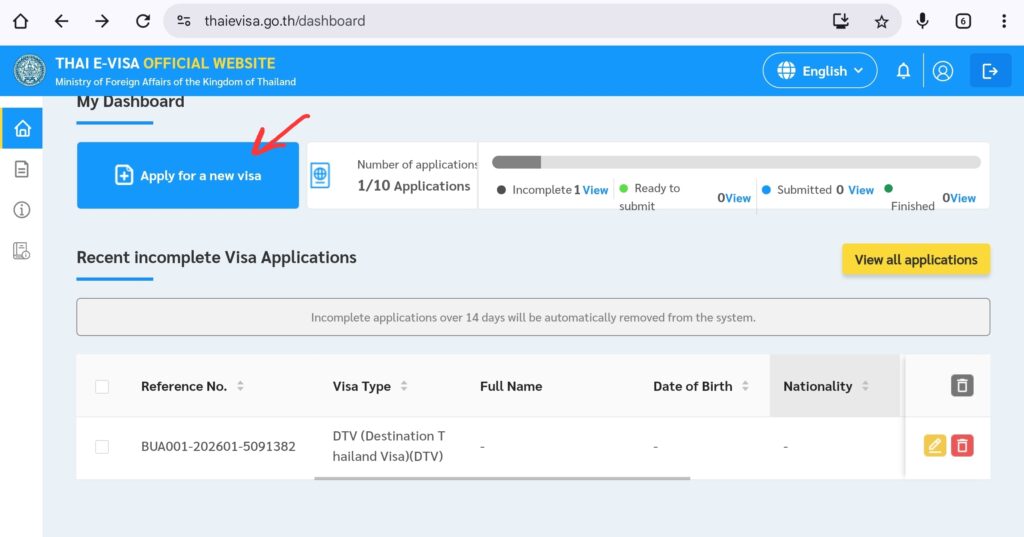
Choose your application type from dropdown menus:
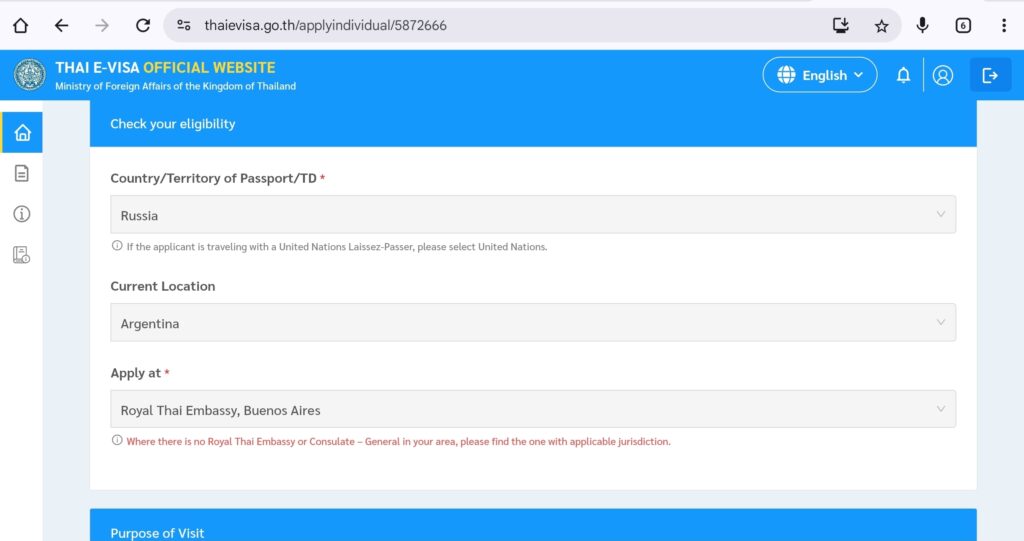
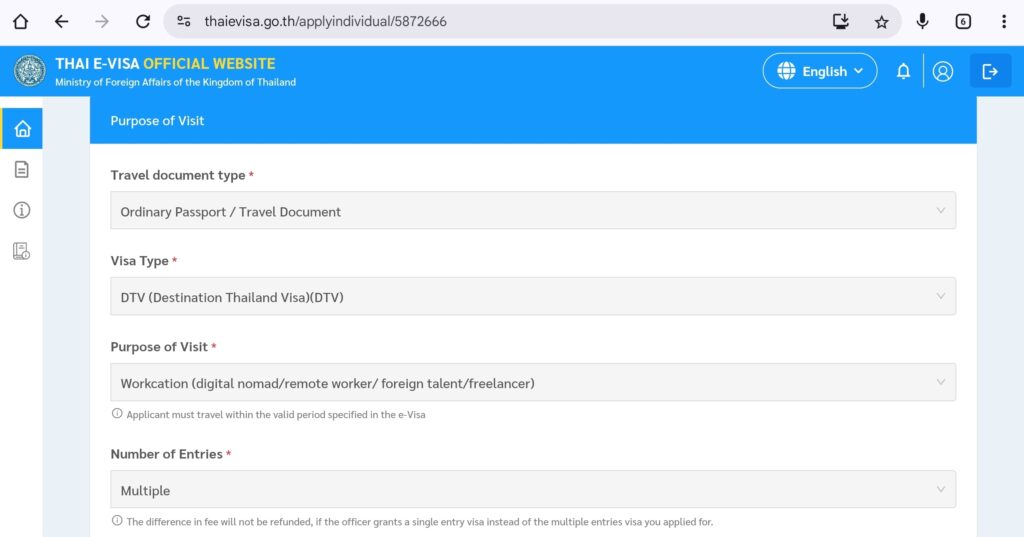
IMPORTANT: For people with numbers and suffixes like I or II, Jr, etc, it will cost you the application (and the money!) if you omit it. Best to email the embassy to ask where to input it, some ask to put it under middle name, some under first name.
After you choose the type, you can start uploading documents:

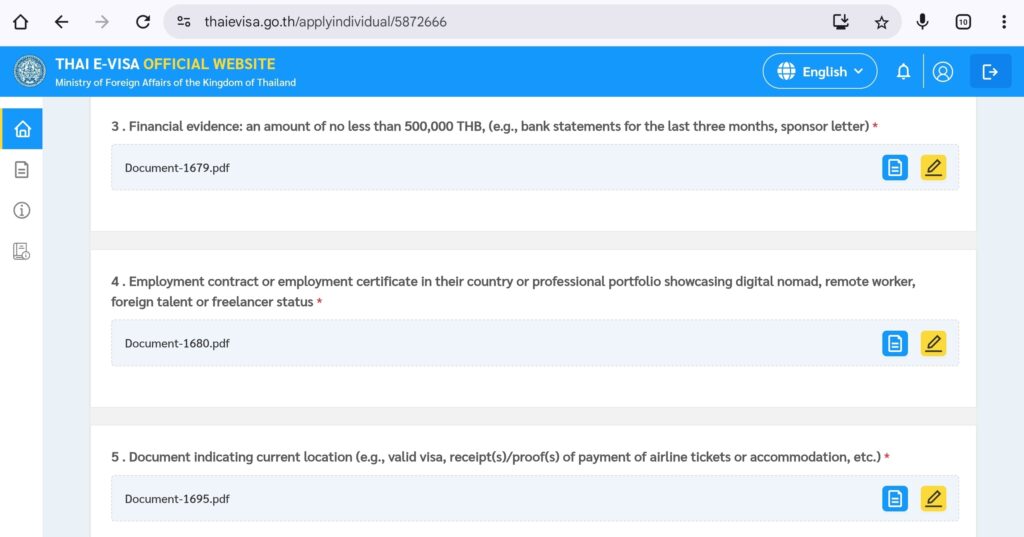
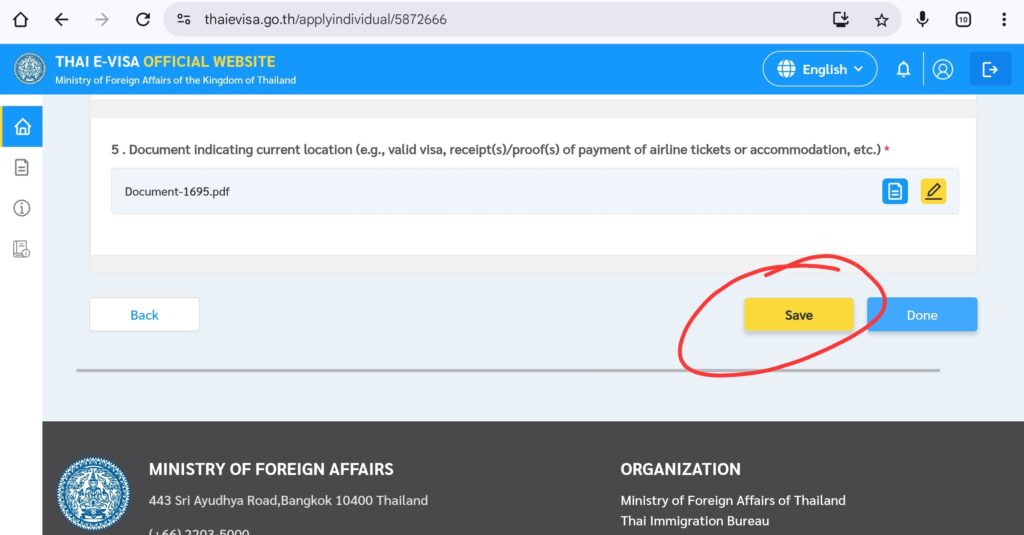
Make sure to click SAVE to make sure your progress is not lost.
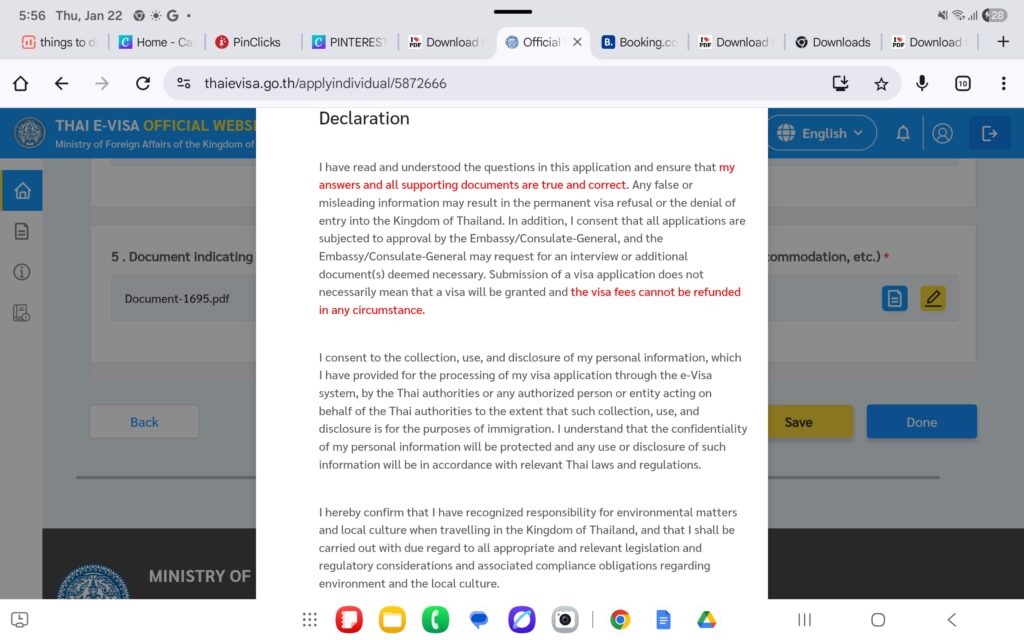
Before you continue to finalize the application ,the system will ask you to confirm your data. IT IS VERY important as a mistake in application will cancel it, but the application fee is NOT refundable.

Payment and turnaround.
Some embassies still collect payments in person (Argentina does), but many switched to fully online process, so after submittingyour application, you can pay.
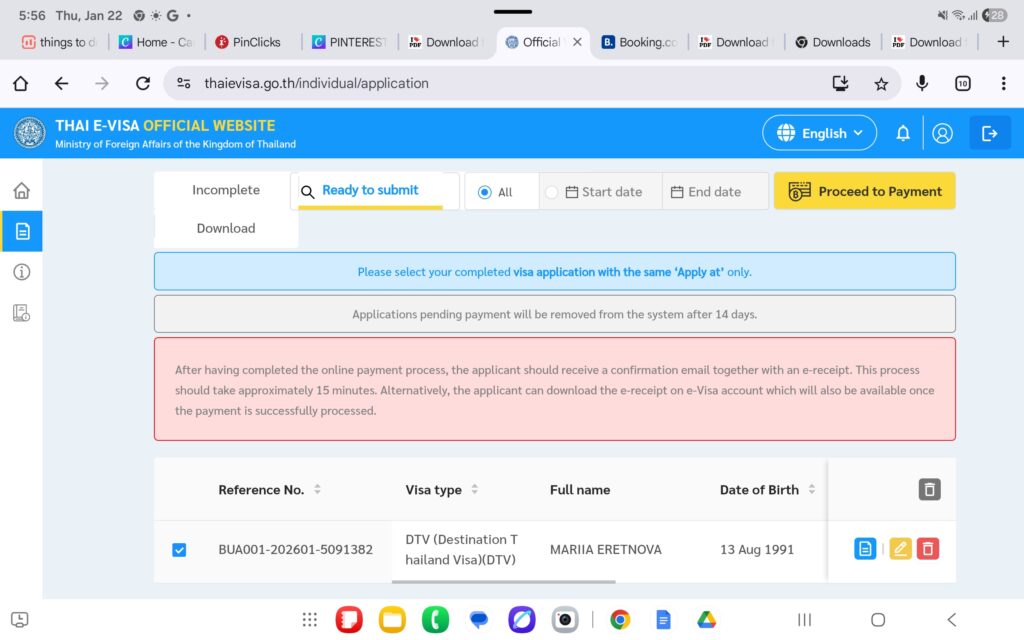
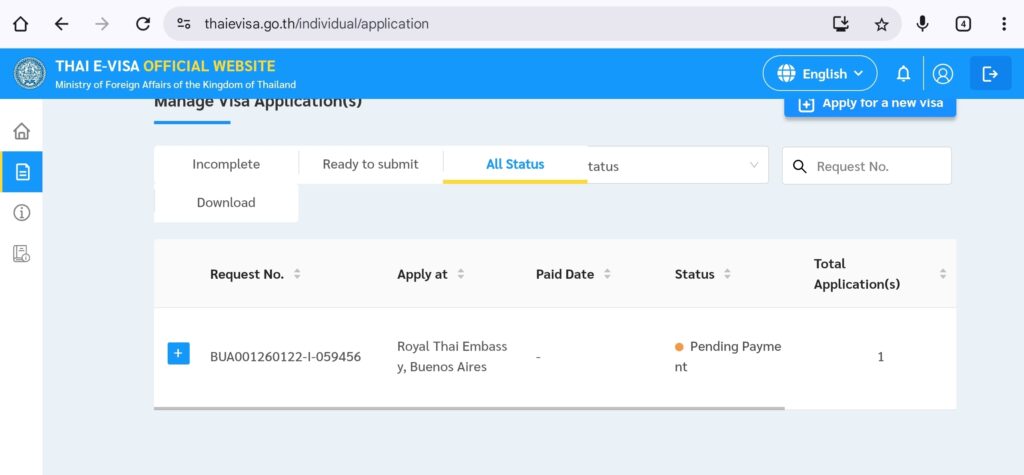
Meanwhile, you will already see your application on the list with a new status: pending payment:
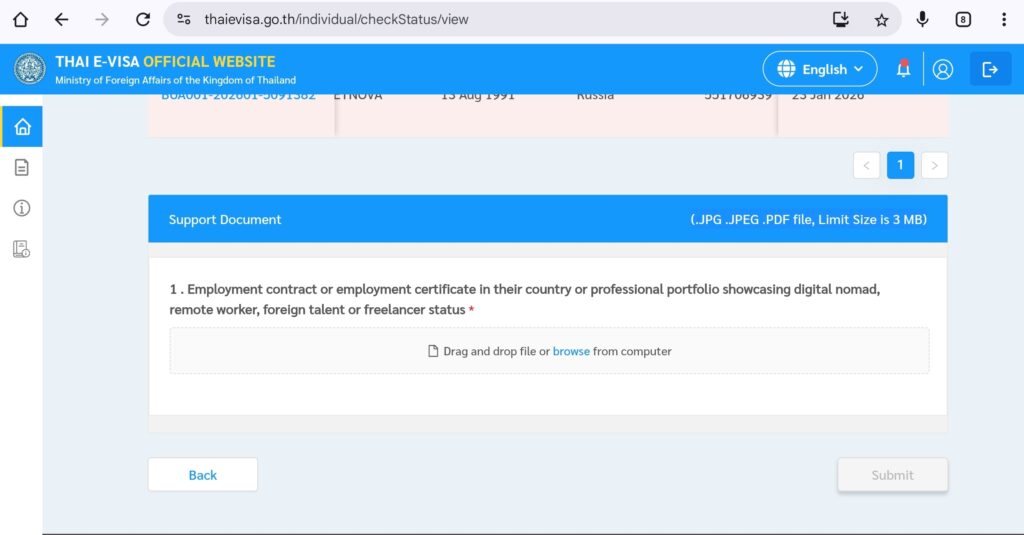
If you receive a request fo additional documents, you will see a new button in your dashboard to upload a pdf (under 5 MB):
I submitted everything on Thursday.
Followed up Friday morning with the embassy by email and asked how and when I can come and pay. Scheduled my visit for the same day.
The advantage of applying in Buenos Aires is that there was NO ONE! No lines, no foreigners besides me, so I think it contributed a lot to the fact that I was approved so quickly and had no issues.
I walked in, paid 400 USD in cash in USD (not local currency), and was told I’d hear back within a few business days. For comparison, my partner applied a few days later and he was approved 40 minutes after payment, as consulate employee offered to review his file right away.
Back to my case. Friday. The same day I was requested to resubmit work information and I simply sent the same file via both email and the system. Followed up with the embassy to let them know I did that.
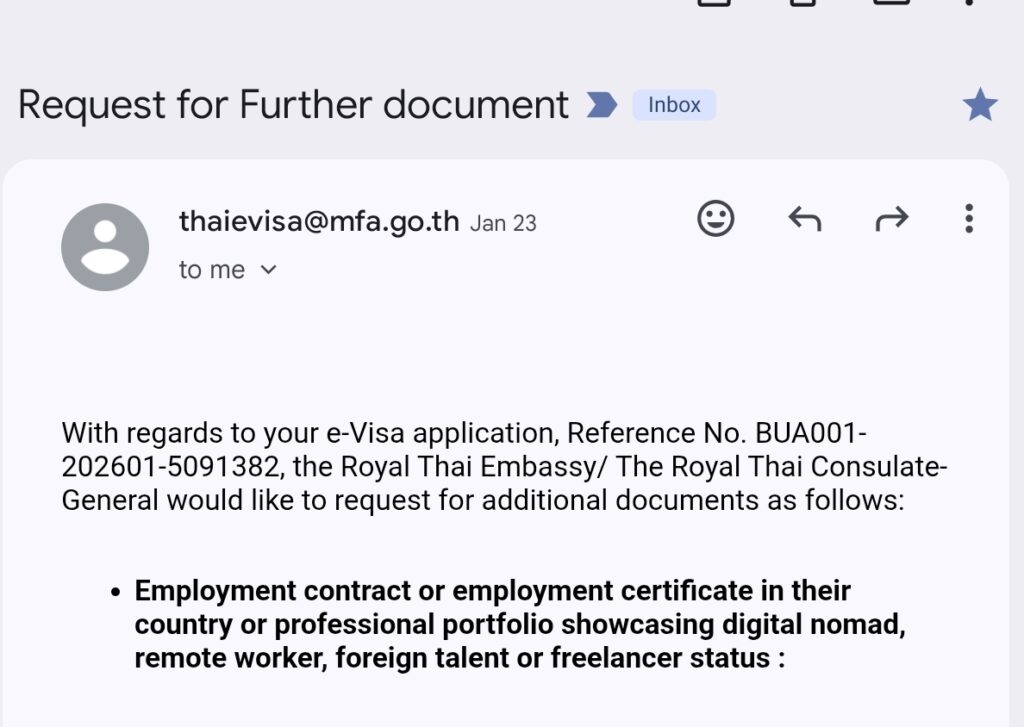
Monday morning the approval landed with my e-Visa attached, which made my morning!!
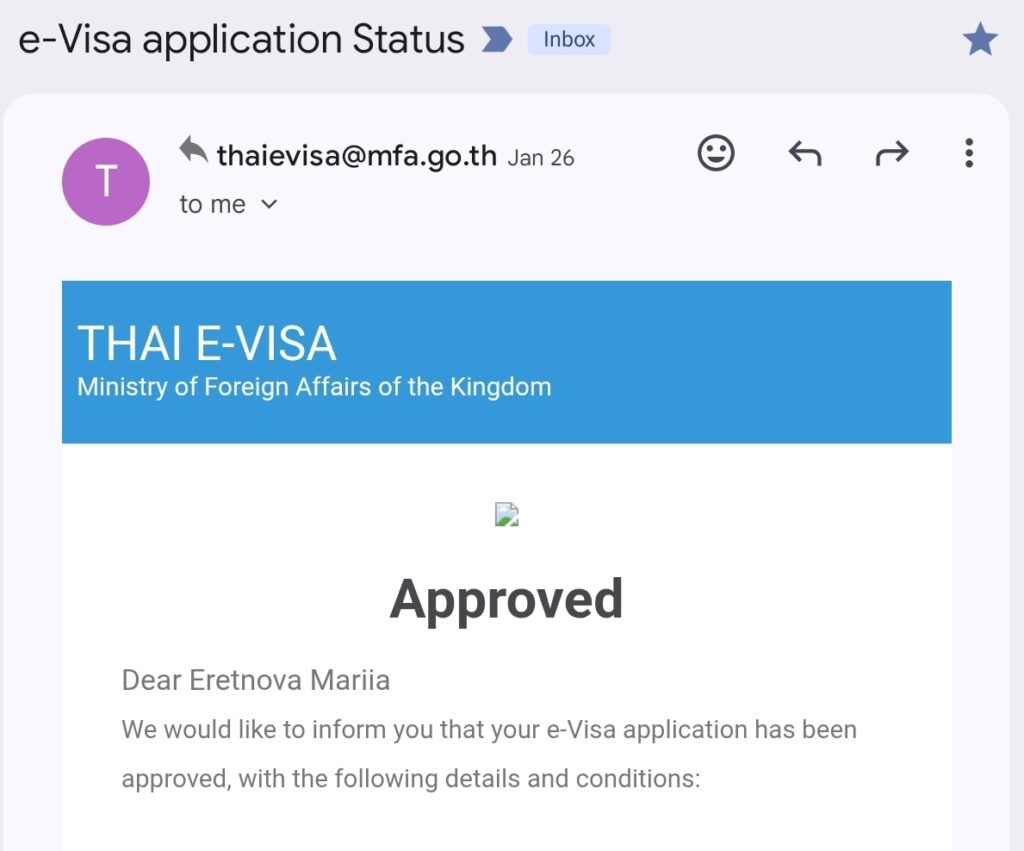
You will see the email and the status update online: Delivered Visa by Email
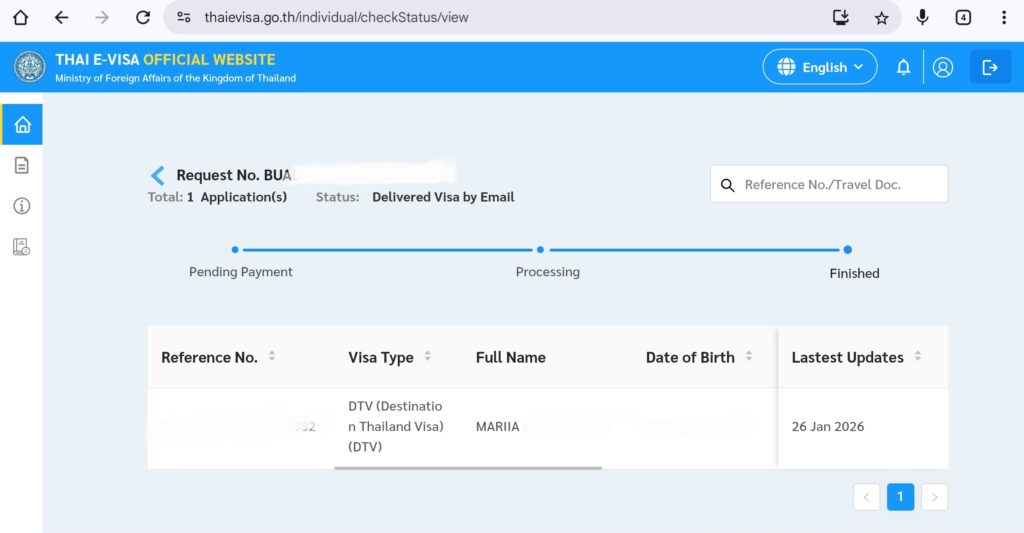
The visa is issued for 5 years starting from the day of approval. You can enter at any time, but the clock is ticking.
Thailand Entry
I flew into Suvarnabhumi airport in Bangkok in April 2026.
I had on me:
- Printed and laminated small copy of the DTV
- Passport
- Boarding pass
- Email with my Thailand Digital Arrival Card (TDAC). You have to prep it within the 72-hour pre-arrival window (mandatory since May 2025, and free at tdac.immigration.go.th)
- Screenshot and pulled up airbnb to show my address if asked.
The lines were pretty big, but things moved at pace. I think we spent about 40 minutes there.
The female immigration officer scanned my passport, looked at the visa, and waved me through. No questions. Female IO often get a bad rep online but I had no issues.
We stayed one night in Bangkok before taking the train to Chiang Mai. Arrived in Chiang Mai without any issues.
How others have applied
If Buenos Aires isn’t your route, here’s what to expect at other major posts.
United States.
Most North American applicants apply at LA, DC, NYC, or Vancouver.
The US posts set a higher financial threshold — about USD 17,000 — well above the 500K THB equivalent most other embassies use.
Pay stubs aren’t enough; you need a hand-signed letter from HR or your manager confirming position, work status, and salary. An offer letter or acceptance letter on its own won’t pass. Self-employed applicants substitute a business licence or registration in their own name.
Non-US citizens must include either a US Permanent Resident card or a valid US visa with at least 6 months remaining. Any documents issued outside the US or Thailand need certified English translation and notarisation by an embassy, consulate, or Ministry of Foreign Affairs.
Screenshots and unclear scans trigger a request for more documents and delay the file.
United Kingdom.
The London embassy codifies an £11,000 floor (about 500K THB) and routinely asks for extra documents — branch-stamped bank statements, business certificate legalisation for non-UK companies, and additional employment proof. Processing runs around eight days when documents are clean.
Asia
Vientiane, Phnom Penh, Hanoi, Ho Chi Minh City, and Jakarta all accept third-country applicants. Vientiane is fast but in-person and cash only. Phnom Penh moved to e-Visa in October 2025.
Hanoi tightened through late 2025 but remains the absolute most popular location to apply, and fastest to get approved, too.
Laos is also known for inviting applicants for an interview, which rarely happens in Vietnam.
Singapore accept applications from citizens and LTP holders only; SG passport holders blocked by free-visa agreement
Kuala Lumpur (Malaysia) is notably stricter than its regional peers and I would not recommend it unless you are a Malaysian citizen and you already have everything in order.
The KL embassy uses 65,000 MYR as the alternative to 500K THB and asks for six months of salary slips, not three.
You must authenticate both your foreign employment contract AND your company registration or business licence at the embassy of the country where your company is registered. That single requirement rules KL out for most freelancers and small LLC owners.
KL also wants three completed application forms with three photos, plus proof of prolonged residence in Thailand (such as a 6-month lease or condominium agreement) — meaning you need accommodation arranged before applying.
Permanent residents apply with PR card; non-PR applicants need a Malaysian multi-entry visa with at least one year validity. E-Malaysian Pass holders need certification from Wisma Putra (the Malaysian MFA) before lodging the application.
Japan is also very strict. Many applicants report receiving a six-month METV instead of a five-year DTV. Interview is also a strong possibility here and can be quite rigorous, but will be focused mostly on nature of your work.
Europe
Oslo, Copenhagen, and Berlin run smoothly. Paris, Madrid, and Vienna lock applications to local residents and run long.
Why applications fail
The patterns from rejection reports stay consistent:
- Parking money. Large deposits in the 60 to 90 days before submission. You need three to six months of seasoned funds with transcations that make sense. Also many forget that Bitcoin and ONLY savings won’t work, especially for workation category. However, for soft power I did see people with PARTIAL finances in bitcoin approved. The 500K THB must sit in your personal account, not business.
- Insufficient income proof. One or two clients, vague titles, no portfolio depth, no tax-return paper trail. Sometimes there is just so many documents, officials are lost. HIGHLIGHT the important numbers and explain everything in a cover letter.
- Mismatched names across passport, bank statements, tax filings, and contracts. It applies to names of the companies, too.
DTV Approval Times (Reported Online)
These are averages from community reports. I will monitor groups to keep these numbers updated.
| Country / Embassy | Approximate time |
|---|---|
| LA (USA) | A few hours to 1 day |
| Italy | 1 working day |
| Argentina (Buenos Aires) | 2 hours to 3 calendar days |
| India | 2 days |
| Taiwan | 4 days |
| Philippines (Manila) | 6 days |
| Vietnam (Hanoi) | 6 days |
| Pakistan | 7 days |
| Poland | 7 days |
| UK | 8 days |
| Laos | 8 days, interviews possible |
| Vietnam (HCMC) | 8.5 days |
| Hungary | 9.5 days |
| Japan | 10 days |
| Sweden | 10.5 days |
| Cambodia (Phnom Penh) | 10–14 days |
| Austria | 11 days |
| Georgia (via Turkey) | 14 days |
| NYC (USA) | 14 days |
| Singapore | 15 days |
| Hong Kong | 16 days |
| Indonesia | 16 days (longer times were all through an agent, interviews possible) |
| Malaysia | 16 days |
| Australia | 20 days |
| Israel | 22 days |
| France | 23.5 days |
| Bangladesh | can be longer than 30 days, interviews also possible |
| Pakistan | very little data, 30+ days, interview possible |
Add or subtract roughly two days. Some reports describe working days, others calendar. Average means the middle, not the maximum.
Important Notes
A few things every applicant should know before applying or arriving.
A note on agents.
There’s no such thing as a government-approved DTV agent who can speed up your file or lobby an officer. Several embassies have published statements telling applicants to apply directly.
I see plenty of people reporting their approval time working with an agency being actually much longer than independent applicants.
THERE IS NO NEED FOR AN AGENT. There is absolutely nothing an agent from your country or even from Thaialnd can influence during the process.
If you meet the requirements and take time to arrange your pdf in order, you are good.
If you DO NOT meet the requirements, it means the visa is NOT for you. Harsh, but true! Gaming the system means killing the option in the long run for ALL OF US. And it has started already!
Agencies sometimes bundle their fees with insurance products (60,000 to 100,000 THB) or guaranteed packages that don’t actually guarantee anything.
Taxes.
Thai tax residency triggers at 180 days of physical presence in any calendar year.
Cumulative, not consecutive. The DTV’s 180-days-per-stay structure makes it very easy to cross this line, especially if you extend in-country.
Once you become a Thai tax resident, foreign-source income brought into Thailand becomes taxable in the year you bring it in. That rule changed on 1 January 2024 with Departmental Instruction Por.161/2566. Pre-2024 savings remitted later are exempt under Por.162/2566, but the burden of proof sits on you.
What counts as remittance: bank transfers, Wise, Revolut, foreign-card ATM withdrawals in Thailand, and foreign-card payments to Thai merchants. What doesn’t: money you leave abroad.
A specific trap for US citizens. The Foreign Earned Income Exclusion (FEIE) wipes out US tax on excluded foreign earnings. The Thai foreign tax credit only credits foreign tax actually paid.
If you remit while Thai-resident, you can owe full Thai tax with no offset. Sometimes switching from FEIE to the Foreign Tax Credit produces a lower total tax bill. Talk to a Thai-licensed CPA before year-end.
90-day reports (TM47).
Every 90 days you stay continuously in Thailand, you report your address. The clock resets every time you leave and re-enter, so many DTV holders sidestep this by taking a regional trip before day 90. First report must be in person; later ones at tm47.immigration.go.th. The window is 15 days before to 7 days after the 90-day mark.
TM30 (landlord notification).
Your landlord is legally required to register your stay within 24 hours of you moving in. Most short-term rentals know this; some independent landlords don’t. Without a TM30 receipt, you can’t extend your visa, file a 90-day report, or obtain a Certificate of Residence. Always ask for the receipt before signing the lease.
Once we arrived, we contacted an agent, viewed a few appartments, and every time we specifically asked about TM 30. All were willing, but we also specifically chose a trusted condo.
TM30 landlord penalty: 800–2,000 THB (on landlord not on you, though, but you can use it as leverage if they do not cooperate)
Some people upload the ownership documents and create accounts for reporting themselves if owners are not tech-savvy or simply do not want to deal with it.
Extending past 180 days.
The DTV gives you 180 days per entry plus the option to extend in-country once for another 180.
The extension costs 1,900 THB at any Immigration office. Bring TM7 form, photo, passport with current entry stamp, your TM30 receipt, lease agreement plus landlord ID copy, current bank statement showing 500K THB equivalent, and proof of ongoing remote work or soft-power activity.
Apply two to three weeks before your current 180 days run out.
Chiang Mai’s office at Promenada Mall is one of the easiest in the country. Bangkok’s Chaeng Wattana is the busiest — arrive by 7:30 AM if you go there. Many DTV holders skip the extension entirely by leaving regionally before day 180 and re-entering on a fresh 180-day stamp.
Both routes are legal under the multi-entry structure but extension may take A LOT of time based on reports and is not guaranteed. Officers may openly recommend you a short vacation rather than extending.
What it costs total?
Visa fee 10,000 THB (about USD 350-400) once at application. In Argentina it was 400 USD, I’ve heard in Russia it was 350 USD.
If your documents are not in English, you may have to pay for translations and rarely for apostille.
Health insurance specifics — SafetyWing Nomad ($56–80/mo), Cigna Global, Pacific Cross Thailand, Allianz, etc.
In-country extension 1,900 THB (about USD 60) per use.
TDAC and 90-day reports are free, however, TM47 late penalty is 2,000 THB for self-reported case or 5,000 THB if caught.
Border-run flights typically run USD 100 to 300 each.
Health insurance is optional but smart at USD 50 to 150 a month for a healthy under-50.
Banking workarounds (Wise, Revolut) cost a few dollars a month in ATM fees.
Over five years, the visa-side spend stays modest — under USD 2,000 for most people. The bigger costs are the ones you’d have anywhere: rent, food, flights.
Banking.
Bangkok Bank, Kasikorn, SCB, and Krungthai now classify DTV holders as tourist-class and won’t open new accounts as of January 2026.
Some existing accounts have been frozen during compliance reviews or asked to visit the branch to update the info.
Workarounds: Wise (accepts DTV!), Revolut, PromptPay through a Thai friend’s account, or agency-assisted opening (15,000 to 40,000 THB, often paired with insurance products).
You don’t need a Thai bank account to qualify for the visa, though, the 500K THB can sit in your home-country bank.
Work permit grey zones
The DTV doesn’t include a work permit. The legal carve-out for foreign-client remote work rests on the Royal Gazette announcement of 15 July 2024 and ministry practice, not a Department of Employment notification. As of now, there was NO publicly reported DTV-holder deportation for remote-only foreign-client work.
Safe: remote work for foreign clients paid abroad.
Prohibited: invoicing Thai entities, taking Thai clients, directing a Thai company, accepting paid Thai gigs. You printed visa has a note: Employment prohibited.
Grey zones include in-person meetings with Thai clients and paid speaking at Thai conferences. The compliance statement many embassies request — acknowledging you’ll work remotely only and not engage Thai counterparties — is not a formality.
Penalties are serious: 5,000–50,000 THB fine and/or up to 5 years imprisonment plus deportation.
Border bouncing.
Legal under the multi-entry structure. Land or air both work.
As of November 2025, same-day land-border bounces (Aranyaprathet to Poipet, Mae Sai to Tachileik) face increased scrutiny. Budget at least one night outside the country.
Visa-exempt entries are now capped at two per year, that doesn’t apply to DTV holders directly, but it can catch you between visas.
Children and schools.
The DTV is technically tourist-class, which makes some top-tier international schools (ISB, Bangkok Patana) cautious.
Most accept DTV-Dependent students in practice; ISB is the strictest. Chiang Mai schools (Lanna International, Prem, CMIS, Grace International) are notably DTV-friendly.
Public schools accept foreign children at low fees but instruct in Thai.
Renewals at year five.
The DTV is a five-year visa, but we don’t know what is going to happen. The current government is unlikely to remove a visa Anutin himself signed into existence as Interior Minister, but visa policy can change.
Have a plan B ready for when time comes:The LTR visa, Thailand Privilege, or Non-Immigrant B with a Thai company are all options for those building real long-term ties here. Or simply another country.
FAQs
Can I apply for the DTV inside Thailand?
No. You must apply from outside Thailand, either at an embassy or consulate or through thaievisa.go.th while abroad. There’s no in-country switch from a tourist visa to a DTV.
Can I apply with stock trading?
You can not use stock trading as financial proof for workation, but it might be accepted if you’re applying as a soft power. However, the requirements are getting stricted and it is not a guarantee. Your best bet would be a friendly thrid country like Vietnam, Hanoi consulate specifically.
Can I Just Transfer 500k TDH into My Account To Apply?
No.
All funds should be seasoned for 3 to 6 months, depending on your consulate requirements.
Can I bring my unmarried partner?
No. The Dependent category covers legal spouses and unmarried children under 20. De facto partners and common-law spouses don’t qualify, however long the relationship. Each partner applies for their own DTV under Workcation or Soft Power.
Does the DTV come with a work permit?
No. The DTV permits remote work for foreign clients only. Thai jobs, Thai clients, and directing a Thai company still require a Non-Immigrant B visa with a separate work permit.
Can I switch from a DTV to LTR or Non-Immigrant B later?
Yes, but you’ll need to leave Thailand and apply fresh — there’s no in-country switch from a DTV to either. The LTR visa offers stronger benefits (statutory tax exemption on foreign income, work permit included) for those who meet the income or wealth thresholds.
A final word
The DTV isn’t perfect. Banking is a hassle, taxes deserve real attention, and embassy variance is genuinely frustrating if you’re stuck somewhere strict. But for a Western freelancer or LLC owner who wants to live in Thailand on a real legal footing for years, no other option comes even close on flexibility and cost.
Compared to the hassle you need to go in other countries to get a visa for even a fraction of that, DTV holds its value beautifully and I highly recommend it if you qualify and love Thailand.
Clean documents, real money, an honest understanding of what you’re committing to — that’s the entire formula. The application itself is straightforward. I’m proof of that.
Sources
- Royal Thai Government, Ministry of Foreign Affairs — DTV Checklist for MALAYSIA
- Thai Revenue Department — How Do Foreigners Living in Thailand Pay Tax (Section 41)
- Royal Thai Embassy, Buenos Aires, where I and my partner applied.
- Thai e-Visa Official Portal: https://www.thaievisa.go.th
- Thailand Digital Arrival Card (TDAC): https://tdac.immigration.go.th
About The Author
